Hello Betamax, Alexandr Wang correcting the internet’s estimates of his outfit’s price – down to identifying his underwear – cracked me up. But underneath the joke was a much more ambitious Meta. He wore the contentious outfit while Mark Zuckerberg was introducing the world to Muse Charm, Meta’s Tamagotchi-like device for talking to Muse, its personal AI agent. Whether it’s planning trips, booking reservations, or ordering groceries, Meta promises Charm will let users tell Muse what to do without having to open an app on their phones.

Image credit: Made by Ulla/Tech in Asia with the help of AI
If Charm catches on, I’m sure Meta will have plenty of competition in Asia, where cute characters linked with devices are hardly a new concept. The company’s AI glasses already face Chinese rivals such as Xiaomi and Rokid, so I wouldn’t be surprised to see a similar field emerge around pocket-sized AI agents. But when Meta starts chasing something this aggressively, it’s worth paying attention. Mark Zuckerberg is a competitive monster. This brings us to one of our top AI reads this week. I reported on the competition between Meta and the startups building AI agents on WhatsApp. I spoke to founders about how they plan to stay relevant when the platform they depend on starts targeting the very same businesses they’ve been serving. Also worth a read is this piece on why a Singaporean founder shuttered his startup despite landing seven-figure enterprise contracts. Amid the funding rounds, soaring valuations, and industry hype, consider this your reminder that not every AI startup is going to make it. Later in this edition, we look at why Anthropic’s IPO prospectus isn’t quite as rosy as it seems and the monster deal between AMD and World Labs. Glenn Kaonang, journalist Editor’s note: This is the Wednesday edition of The Prompt. Our AI newsletter now comes out twice a week. For a deeper dive, check out Monday’s edition, where we unpack one big AI issue shaping the industry.
TOP AI READS FROM OUR DESK 1️⃣ They built AI agents on WhatsApp. Then Meta entered the chat
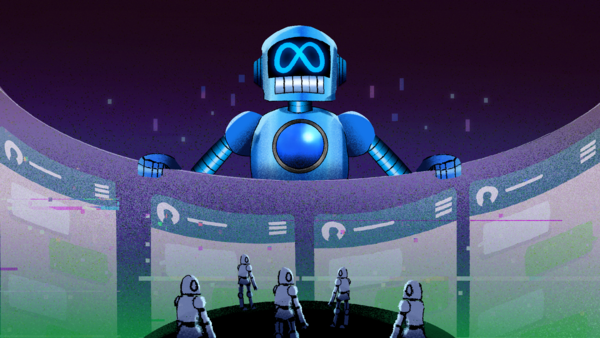
Image credit: Ulla
Meta is selling its own AI agent while introducing new messaging charges for businesses using third-party agents on WhatsApp. Startups such as Voltade and Mimin are responding with subsidies, customization, and connections to clients’ existing systems. According to the businesses we spoke with, answering messages is just one part of an agent’s job. Handling warranties, deliveries, and bookings gives startups room to compete, though they’ll have to keep proving they’re worth the extra cost. 2️⃣ Why this founder killed his AI startup despite early success Nex AI won seven-figure enterprise contracts for its data platform, but long sales cycles and complicated client problems wore down its founders. Jonathan Liem ultimately shut it down and applied what he learned to a new startup, AI-search platform Inflect. He shares several insights from the experience in this interview. One of them is how an unsexy problem can make a promising business, but that doesn’t mean a founder wants to spend a decade solving it.
WHAT ELSE WE’RE THINKING 1️⃣ Anthropic’s prospectus has some uncomfortable numbers

Photo credit: Mijansk786 / Shutterstock
Anthropic is gearing up for an IPO that would value it at over US$2 trillion, according to its prospectus seen by Reuters. That figure would top SpaceX’s US$1.8 trillion public debut, but the filing also shows a few things investors should consider. For one, Anthropic’s revenue grew 12x to nearly US$4.6 billion in 2025. Nearly a quarter of that came from just two customers, and the AI lab warns that many of its biggest clients aren’t locked into long-term contracts and could reduce or stop spending. Meanwhile, Anthropic spent around US$7.3 billion on computing and infrastructure last year, and it plans to add US$518 billion to that figure in the coming years. A careful balancing act is necessary here. Anthropic needs enough computing capacity to serve the demand it expects, but a customer spending today isn’t a promise to keep spending tomorrow. And when two customers account for so much revenue, even one trimming its budget could leave a noticeable dent for Anthropic. 2️⃣ Your AI can shop for you, if the shop lets it Google is testing purchases from Flipkart inside Gemini and AI Mode in India. Meanwhile, Amazon has blocked Meta’s Muse from shopping on its platform. Same pitch – let an AI do the shopping – but very different receptions. For retailers, a third-party assistant could bring in customers who are ready to make a purchase. But if those customers compare products and make their decisions in a separate app, the retailer has fewer opportunities to influence what goes into the basket. It may still get the order, but it loses some control over the shopping experience. Flipkart’s test is limited to selected users and products, and it retains its own checkout flow. We’re still some way from handing an agent a shopping list and letting it loose everywhere. Put simply, making shopping simpler for consumers depends more on the retailer’s permission than the AI’s capabilities. Your preferred AI assistant might not be your preferred shop’s preferred AI assistant. 3️⃣ Cheap AI has a rush hour too DeepSeek reportedly reached a US$1 billion annualized revenue run rate, helped by higher prices and continued demand. The company kickstarted the cheap AI era, but answering the question “how much does it cost” isn’t straightforward. Its peak API rates are double the off-peak rates. The weekday peak windows cover 9 a.m. to 12 p.m. and 2 p.m. to 6 p.m. in Singapore – in other words, much of the typical working day. That means two businesses using the same model for the same amount of processing can face different bills simply because one can move its work to quieter hours. You can process invoices overnight to save money, but your customer-service agent can’t ask customers to come back when the AI is cheaper. It shows how the relevant price for an AI model is what it costs when your customers need it, not the lowest number on its pricing page.
STANDOUT AI DEAL AMD to acquire AI lab World Labs in $8.2b deal AMD has agreed to buy Fei-Fei Li’s World Labs in an all-stock deal worth approximately US$8.2 billion. Founded in 2024, World Labs develops world models and raised US$1 billion from several investors, including AMD, earlier this year. Through its venture arm, AMD had also backed Singapore’s Video Rebirth, which is developing its own world models. Owning one of the labs would give AMD a closer view of what tomorrow’s AI needs from its chips, particularly in robotics, which is where world models are expected to make the biggest impact.
AN EXPERT VIEW ON AI We spoke with Rajath Ramesh, senior director of group product and platforms at Carousell Group, on the sidelines of the Tech in Asia Conference in Singapore earlier this month. He shares how a company with different products in its portfolio unifies its engineering foundation to build with AI. The interview has been edited for brevity and clarity.

Photo credit: Tech in Asia
Carousell has different products in different markets with different tech stacks. How does this affect your team’s use of AI in engineering? The work to make our products’ engineering more unified dates back to before the genAI and LLM era. We had Cho Tot, Mudah, Laku6, and other companies joining us through M&A. Each had specializations and customizations tailored for its users. That is something we never wanted to touch. But when we were doing enhancements or upgrades, we wanted to make things more uniform. Our goal was for solutions built in one business unit to be reusable across others, rather than having to solve the same problem on different platforms. During this journey, we wanted to keep things self-serve, with guardrails baked into the systems: who has access, who is the approver, and how the entire change flows into the system. When AI came, much of that foundation was already in place. For agents to work in our systems, they need access to business context, product context, and an understanding of how the systems work. That involves business-critical and user-specific data, so we needed to codify the guardrails around their access. We spent additional effort making sure agents could access our systems in the same way as humans, with those guardrails taken into account. That has helped us scale AI usage across the organization with confidence. What is an example of what changed after you unified the platforms, and how does AI build on that work? A combination of standardization, unification, and AI means that everybody in the organization now has access to business data and product-performance data, such as how a particular funnel is looking. Earlier, business intelligence and data analysts had to enable that. Now, it is self-serve. We also have the same way of experimenting and reporting on experiments, so product owners can get feedback faster. We created a central knowledge base. It starts with a static layer: what our business is, what the product is, and what domains we have. We have also standardized building blocks such as service definitions, which map every service to a particular domain. Now, the agent can reason that a query is in which domain and identify which microservices are related to it. If it wants more information, it looks into the Markdown files. If it does not get the answer, it checks out the code, understands the flow, and goes into the client-facing part to see how the real use case looks. Wherever we see gaps, we add enough context so that the next run is better than the previous one. Over time, that increases trust. The next thing we did was make it accessible to agents with codified guardrails. When an agent is accessing data, I do not want it to know the real personally identifiable information. It should not have access to secrets or details of the business that it does not need for its job. That helps us sleep better at night, knowing something is not getting leaked out of our systems without us knowing. As AI agents take on more engineering tasks, some believe that a project team could shrink to one product manager, one designer, and one engineer. How has AI changed the structure of your product and engineering teams? We have been a lean organization even before AI, where our biggest team was no more than six people involved in a particular initiative. People have been wearing more than one hat as needed. AI has made it faster and easier for people to onboard and gain expertise in different areas. But knowing a bit of each area is not enough to deliver a quality product. They still need depth in the things they are contributing to. For example, an Android engineer should be able to contribute to iOS with AI, because the basics are the same. But they still have a learning journey if they want to contribute to back-end work. For users, which AI feature has been most successful? Have any met resistance, and what have you learned about introducing AI features? On the product side, we always look for a step change rather than an incremental improvement. List with AI is one major example. In a consumer-to-consumer marketplace, users sometimes do not give complete information. Let’s say I am selling a phone. I put up one photo and leave it, but there are a lot of things that need to be filled in for search and transactions. With AI, we can extract attributes and make our other flows richer without adding a burden to users. As we worked on List with AI, we gained more confidence. Users liked it, we improved it, and it became the default way to list. We are also piloting AI Car Finder. There are users who look on our platform for specific brands, but there are also users looking for a family car within a particular price range that should be cost-effective. Those requests become more realizable with AI. We do not stop people from proposing ideas or experimenting, but we usually do it internally, where it is easy to create prototypes and demonstrate what we want to do. We then iterate or come back to it later as the technology improves. We have been very cautious about taking these things to users because we do not want our users to be our testing ground. The experience should feel natural to users, with the right amount of onboarding and education within the app or through our communications. We start with a small part of the product, see how users like it and accept it, gather feedback, improve it, and then make it the primary experience.
Catch up on past issues of the newsletter here. |