FOUNDER FOCUSBengaluru-based Runable raised a US$21 million series A round last month, co-led by Susquehanna Venture Capital and Nexus Venture Partners, with Together Fund and Array VC as returning investors. Founded in 2025, the startup began by selling developers the plumbing for large-scale web scraping. It pivoted after watching users ask its browser agent for slide decks and websites instead. Now, it's comparable to platforms like Lovable or Emergent. However, co-founder and CEO Umesh Kumar wants Runable to be closer to an operating system for small businesses, one that builds the site and then goes out and finds the customers. This interview has been edited for length and clarity. 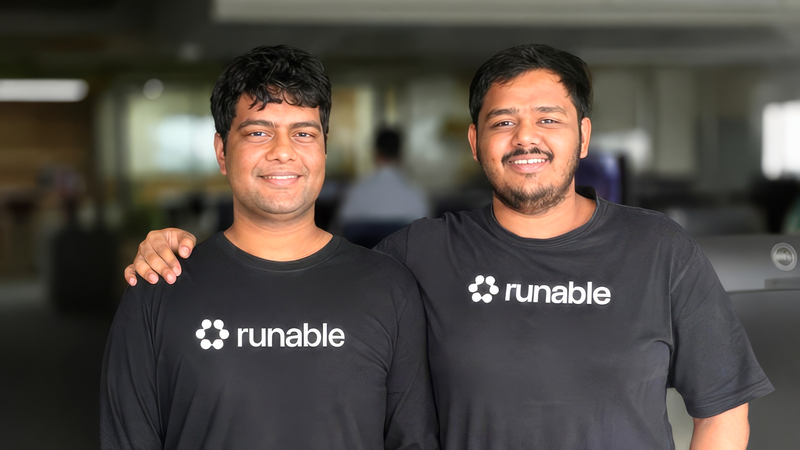 You are catering to small businesses, and I get the sense you are somewhat similar to Emergent. Is what you do kind of like vibe coding? We don't call ourselves vibe coding. Our goal is simple. A small business can come to Runable and build, run, and grow their business. Emergent can only make landing pages. Runable is beyond landing pages. If you look at companies in this space, their new user traffic spikes in the first month and then there is nothing. They made something on Emergent, or Bolt, or Lovable, but they don't know how to get that website in front of real customers. If your customer is not earning anything, there is no way they can pay you anything. What are the use cases exactly? We had a yoga teacher in Italy who came to make a logo. Then she found out we make websites, so she asked for one. Then a slide deck with her class timings. Then a button that sends those timings over WhatsApp. Then she came to support asking whether Runable could get her customers from a particular area. We built her a custom skill and ran the ads on our own agency accounts. Her use case was never getting a website live. Closing that loop needs shared context about everything the business does. That is why we have a meeting recorder. This call is being recorded by Runable Live so the agent knows what is happening in my life. The dictation feature works the same way. Customers use it because it writes to any app, but everything they say is captured on Runable. Say you have not connected your Slack. If you used Runable to type, I already know what you did there. That is a lot of work for the AI to do. Relying on proprietary models gets expensive once you deploy agents. Are you using open source? Most of the stack is ours. Our own harness, databases, analytics, infrastructure. We started as an infrastructure company, and Saksham and I are both technical. We use open-source models for a lot of things and we are training our own. It is roughly 10x cheaper and almost equivalent to Opus, and we are deploying it for a few customers already. Our priority is to pass those savings back to users rather than get gross margins positive. What does traction look like and who is actually on the platform? Around 1.7 million signups, with monthly active users beyond 100,000. Three categories retain: small and medium-sized businesses, consultants, and agencies building for their own clients. Geographically, it is the US and Brazil, and Japan is growing fast. Japan retains very well and it is a high ARPU (average revenue per user) market. Then the UK, Italy, France. What's about India? Runable is an expensive platform. We promise outcomes, not artifacts, and that is where we burn tokens. That is why India is not a good market as of now. We saw the same thing in Brazil. Users came, tried things, and churned. We expect India to become a viable market within the next three or four months as inference costs fall and we further optimize the platform. Can you share more details about your business model? Is it subscription or outcome-based Subscriptions and top-ups. A US$20 plan gets you 25,000 credits and you buy more when you run out. With Grow (the company's new product for running customer ad campaigns), we are adding a card the agent can spend on - for ads or anything else. If a task is too complex for AI, Runable can hire a real human and pay them off that card. That is live for a few customers only. How do you plan to use the US$21 million that Runable has just raised? Mostly into Grow. We are working with Facebook and TikTok so a customer can deploy ads without creating any account. We were seven people when we raised and 15 including interns when we closed. We want 25 to 30. The goal is US$40 million ARR (annual recurring revenue) in the next three months. |