|
 |
Welcome to Tech in Asia's daily newsletter, your essential dose of Asia's tech and startup buzz. Subscribe to this newsletter or send story tips to editors@techinasia.com. Ensure our articles appear in your Google searches: 
|
IN FOCUS
|
Hello Betamax, Last month, I was in Noida, just outside New Delhi, for a wedding. Even though I was staying at a hotel, I found myself ordering one thing after another on quick commerce apps - from safety pins to face wash to diapers and a coloring book for my toddler. The habit had travelled with me from Bengaluru to Noida. That, perhaps, is the strongest case for quick commerce in India. What started as a novelty has become a consumer habit and, increasingly, a piece of retail infrastructure, as today's top story explores. This is one reason investors keep pouring money into the sector even as losses mount. New players are still raising funds, while established ones such as Zepto face the public-market test. The company already had to pause its IPO plans. Amazon, meanwhile, is expanding its quick delivery network to 300 cities. Investors bet these companies are building more than a delivery business. The firms are establishing a retail channel that can eventually be monetized through advertising, subscriptions, and product placement. Zepto's ad revenue, for instance, jumped 151% to US$171 million in FY26. But the bigger question is this: Can this rapidly expanding retail infrastructure become a profitable business rather than one that backers keep subsidizing in the hope that it will? Samreen Ahmad, Journalist |
TOP STORYQuick commerce is losing money, but investors keep coming  Besides quick commerce becoming a piece of retail infrastructure, there's a simpler reason investors keep coming back: They have seen the size of the opportunity and don't want to miss what comes next. Zomato's public-market valuation has effectively put a number on what a successful quick commerce business can be worth. Blinkit alone could ultimately command a valuation of US$15 billion to US$25 billion, one investor tells Tech in Asia. The fear of missing out is powerful. |
A NEW PLAYBOOK FOR GOING GLOBALAn exclusive luncheon by CKGSB and Tech in Asia  China's next wave of innovation is reaching new markets, bringing fresh AI capabilities, business models, and approaches around the globe. What could this mean for businesses across Southeast Asia? Taking place on September 15 as part of Tech in Asia Conference 2026, this exclusive luncheon gives you an early look at a joint report by the Cheung Kong Graduate School of Business (CKGSB) and IE University. The study, called "Chinese Companies' New Playbook for Going Global," will be launched at the session. Building on the report's findings, the discussion will go into how these developments are creating new opportunities for growth and partnerships across the region. You'll leave with a sharper read on what to watch out for from China and how it could shape your market, strategy, and next moves in the region. This session is open to Tech in Asia Conference 2026 General, Pro, and VIP pass holders. Register your interest for the luncheon. |
A VISUAL STORY YOU SHOULDN'T MISSWho's looking for funding?  Fundraising is one of the hardest things a founder has to do. For investors, the challenge lies in making sure they don't miss the companies that could become the next big thing. One example is Tripo AI. The 3D-generation startup has raised US$447 million as investors pile into AI companies building infrastructure for new creative workflows. This also shows why it's important to keep track of who is raising and where the money is going. In this tracker, Tech in Asia logs startups across Asia and beyond that are raising funds, bringing together details on each company's specialization, traction, funding stage, investors, and funding target. For both founders seeking capital and investors on the lookout for their next deal, it could just be where you find your next big opportunity. |
HOW PARTNERSHIPS ARE KEY IN THE FIGHT AGAINST CRIMINAL SCAM SYNDICATESIn partnership with 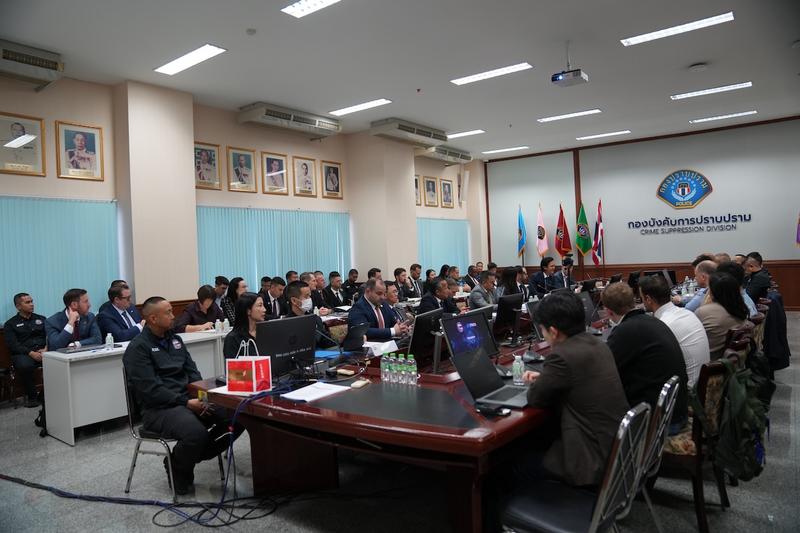 Criminal scam syndicates operate across platforms, banks, and borders, exploiting the gap between each area. Platforms spot the fraudulent post; banks detect the suspicious transaction; law enforcement reviews the victim report - but no single organization sees the full picture. If these gaps persist, stopping scammers will remain a fragmented effort. Good thing a new era of global intelligence sharing is putting everyone on the same page. Criminal syndicates may use AI to launch hyper-realistic, scalable frauds, but the defense is also coordinating its own efforts. Meta, for its part, is utilizing advanced AI to detect complex scam patterns at scale. More importantly, groundbreaking public-private partnerships - like GovTech Singapore engaging with the Global Signals Exchange and joint operations involving Meta, Microsoft, and international law enforcement - are delivering results. For instance, recent collaborative sweeps have disrupted over a million fraudulent assets globally. Meta says this real-time, ecosystem-wide coordination must become the standard to counteract these criminal networks. Learn more about Meta's scam prevention efforts here. |
PRESS PEEKSThe following press releases were published as they were received, without any editing from the Tech in Asia team. You, too, can publish your own press release on our site by simply filling out this form. Our team will get back to you by the next business day.
|
EVENTS HAPPENINGYou can also check out our curated list of trending tech events and Tech in Asia's signature events.
|
WHO'S HIRINGYou can post a job here or search for jobs here.
|
|